Macronutrients
Carbohydrates, proteins, and fats provide fuel, structural building blocks, and essential compounds for physiological function.
Health & Human Metabolism
Macronutrients | Vitamins | Minerals | Hydration | Herbal Supplements
The scientific foundations of human nutrition - how nutrients and bioactive compounds influence growth, metabolism, physiological function, disease prevention, and long-term health across the lifespan.
Abstract
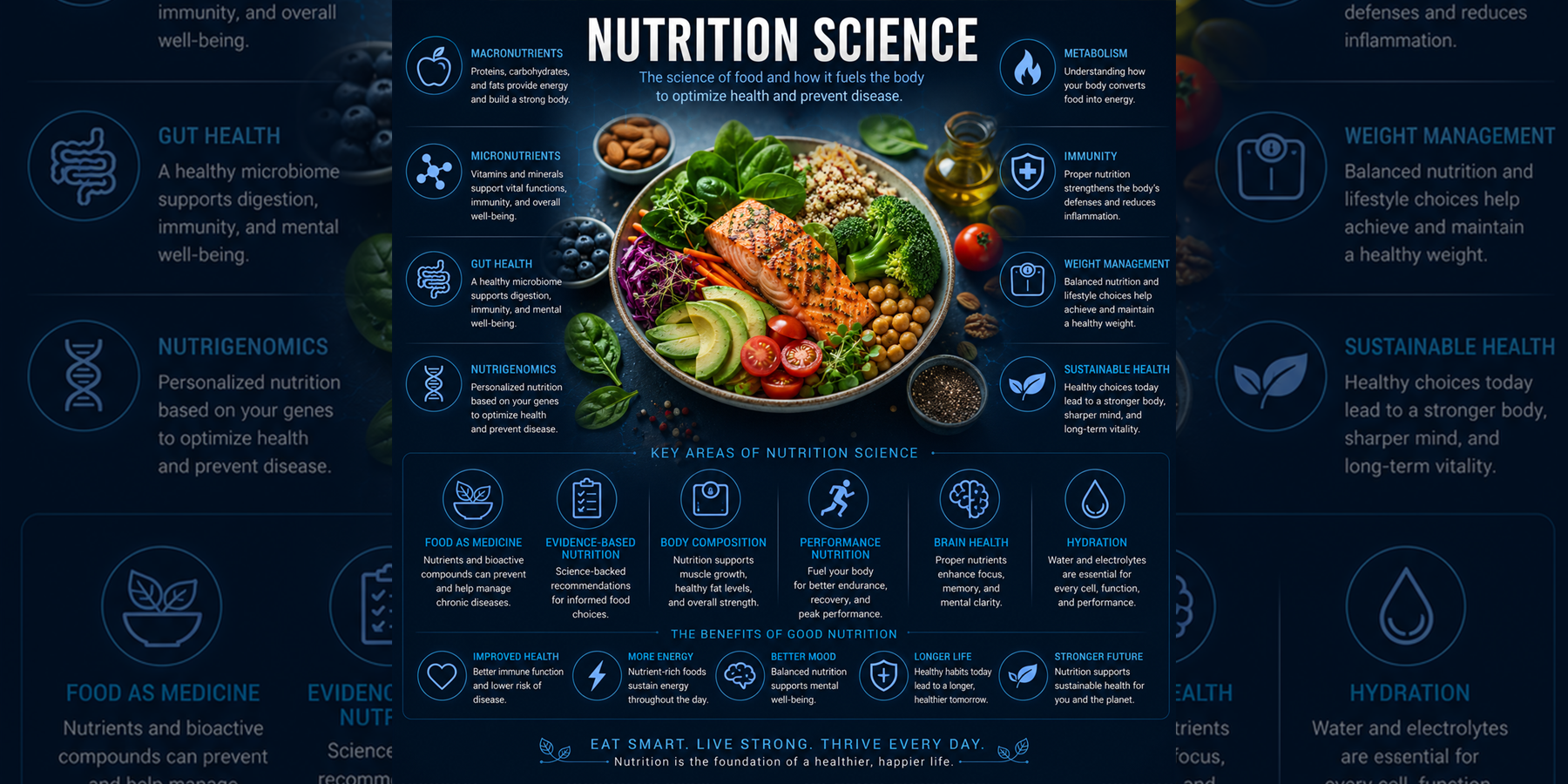
Nutrition examines how nutrients and bioactive compounds in food influence growth, development, metabolism, immune defense, cognitive performance, disease prevention, and long-term well-being.
Carbohydrates, proteins, and fats provide fuel, structural building blocks, and essential compounds for physiological function.
Vitamins and minerals act as coenzymes, antioxidants, electrolytes, structural elements, and enzyme cofactors.
Water supports biochemical reactions, temperature control, blood circulation, waste removal, and joint lubrication.
Phytochemicals and herbal supplements may influence inflammation, immunity, cognition, and cardiometabolic health.
Evidence-based dietary patterns can reduce risk across cardiovascular disease, diabetes, cancer, and bone health.
Genomics, microbiome data, metabolomics, sensors, and AI are reshaping nutrition into individualized care.
Part I
Modern nutrition science spans deficiency prevention, performance, longevity, metabolism, chronic disease risk, and the full complexity of human biology and diet.
Part II
The three macronutrients provide energy and structural building blocks required for biological processes.
Carbohydrates provide glucose for brain function, muscle work, red blood cells, and high-intensity activity.
Whole grains, legumes, fruits, and vegetables support glycemic control, gut health, and cholesterol regulation.
Proteins provide amino acids for muscle, enzymes, transporters, hormones, immune proteins, and tissue repair.
Requirements increase with growth, pregnancy, aging, injury, training, and chronic disease recovery.
Dietary fats are essential for cell membranes, fat-soluble vitamin absorption, hormone synthesis, energy storage, and brain function.
Olive oil, avocados, fatty fish, nuts, and seeds provide unsaturated fats, omega-3 fatty acids, and vitamin E.
General guidance limits saturated fat to under 10% of total energy while emphasizing unsaturated fat sources.
Part III
Thirteen essential vitamins regulate metabolism, immunity, development, antioxidant defense, and neurological function.
Supports collagen synthesis, antioxidant defense, iron absorption, and immune cell function.
Citrus fruits, bell peppers, strawberries, kiwi, broccoli, and Brussels sprouts.
Deficiency can cause gum disease, poor wound healing, and perifollicular hemorrhage.
Supports carbohydrate energy metabolism and nerve function. Deficiency can cause beriberi or Wernicke-Korsakoff syndrome.
Forms NAD and NADH for redox reactions, DNA repair, and energy metabolism. Deficiency causes pellagra.
Supports one-carbon metabolism, DNA synthesis, red blood cell production, and neural tube development.
Supports myelin synthesis, homocysteine metabolism, DNA synthesis, and red blood cell maturation.
Supports vision, epithelial integrity, immune function, and development.
Regulates calcium absorption, bone mineralization, immune signaling, and endocrine function.
Acts as a lipid-soluble antioxidant protecting cell membranes.
Required for blood clotting proteins and bone-related proteins.
Part IV
Inorganic nutrients are essential for bone structure, enzyme function, fluid balance, oxygen transport, and metabolic regulation.
Supports bone and tooth mineralization, muscle contraction, nerve transmission, and blood clotting.
Stabilizes ATP, supports muscle relaxation, and contributes to DNA and RNA synthesis.
Maintains resting membrane potential, nerve impulses, muscle contraction, and blood pressure regulation.
Regulates extracellular fluid volume, blood pressure, nerve signaling, and nutrient absorption.
Required for hemoglobin, myoglobin, energy metabolism, and many enzymatic reactions.
Supports thyroid hormone synthesis and healthy metabolic regulation.
Part V
Water constitutes 50-70% of body weight and is the medium for virtually every physiological process.
Water dissolves and carries glucose, amino acids, vitamins, and minerals through blood plasma.
Perspiration and water's high heat capacity help stabilize core temperature.
Kidneys require adequate water to excrete urea, creatinine, and other metabolic waste products.
Intracellular water provides the aqueous medium for biochemical reactions.
General intake targets are about 2.7 liters/day for women and 3.7 liters/day for men from fluids and food.
Symptoms progress from thirst and dry mouth to dizziness, confusion, rapid heartbeat, and severe medical risk.
Part VI
Plant compounds can have therapeutic potential, but benefits depend on evidence quality, dosage, patient context, and medication interactions.
May reduce duration and severity of upper respiratory infections through innate immune modulation.
Caution: Autoimmune conditions and immunosuppressant interactions.
Ginsenosides may modulate stress response and support cognition or endurance in some clinical trials.
Caution: Insomnia, hypertension, warfarin, and stimulant interactions.
Curcumin influences NF-kB, COX-2, and inflammatory cytokines, though bioavailability can be limited.
Caution: Medication interactions and variable supplement quality.
Part VII
Evidence-based dietary strategies target chronic diseases that drive global morbidity and mortality.
Mediterranean and DASH dietary patterns can reduce cardiovascular disease risk in high-risk populations.
Mediterranean diet, omega-3 fatty acids, sodium reduction, and increased dietary fiber.
Nutritional intervention is central to diabetes prevention and management, supporting insulin sensitivity and glycemic control.
Low-glycemic foods, 5-7% weight loss, soluble fiber, and limiting added sugars.
Dietary patterns influence preventable cancer risk through fiber intake, phytochemicals, processed meat exposure, and inflammatory pathways.
High dietary fiber, antioxidant-rich foods, limiting processed meats, and cruciferous vegetables.
Nutrition supports bone mass accrual, mineralization, and preservation through aging.
Calcium, vitamin D, magnesium, and adequate protein.
Part VIII
Nutritional needs evolve throughout the lifespan, and each stage presents unique requirements that shape long-term health outcomes.
Folate, iron, protein, calcium, and omega-3 DHA support fetal growth, organ development, and maternal adaptation.
Rapid growth, brain development, and immune maturation create critical windows for nutritional adequacy.
Balanced nutrient intake supports performance, chronic disease prevention, cognitive function, and metabolic health.
Protein, vitamin D, B12, calcium, fiber, and structured hydration become especially important with age.
Part IX
Individual genetic, microbiome, metabolic, and behavioral variation means one dietary recommendation cannot optimize health for everyone.
May reduce folate metabolism and increase homocysteine, sometimes requiring methylfolate support.
Obesity risk allele that may influence response to dietary fat and carbohydrate patterns.
Associated with higher LDL response to saturated fat and increased Alzheimer's risk.
Predicts lactase persistence and adult lactose tolerance.
Butyrate, propionate, and acetate are produced from fiber fermentation and support anti-inflammatory signaling.
Gut microbial balance influences energy extraction, obesity risk, immune regulation, and metabolic health.
Microbes influence serotonin, GABA, BDNF precursors, mood, cognition, and appetite signaling.
Neural networks can identify foods and estimate portions from meal photos.
Machine learning can extract diet patterns from records and correlate them with clinical outcomes.
AI systems can optimize meal plans around metabolic responses, preferences, and goals.
AI-driven testing platforms may identify nutrient insufficiencies and personalize supplementation plans.
Part X
Emerging technologies are reshaping nutritional science into a precision, systems-level discipline.
Foods selected or engineered for specific bioactive compounds beyond basic nutrition.
Individual nutrient interventions based on genomic testing, biomarkers, and metabolomics.
Biosensors track glucose, ketones, hydration, activity, and sleep for adaptive dietary optimization.
Time-restricted eating, NAD+ precursors, and senolytic compounds target healthspan pathways.
Genomics, metabolomics, proteomics, microbiomics, and environment data can predict individual responses.
Scientific References
Gropper, S. S., & Smith, J. L. (2023). Advanced Nutrition and Human Metabolism (8th ed.). Cengage Learning.
Mahan, L. K., Raymond, J. L., & Escott-Stump, S. (2024). Krause's Food & the Nutrition Care Process (16th ed.). Elsevier.
National Academies of Sciences, Engineering, and Medicine. (2020). Dietary Reference Intakes for Nutrients. National Academies Press.
U.S. Department of Agriculture (USDA). (2020). Dietary Guidelines for Americans 2020-2025. USDA.
World Health Organization (WHO). (2023). Healthy Diet Fact Sheet. WHO.
Institute of Medicine. (2005). Dietary Reference Intakes for Water, Potassium, Sodium, Chloride, and Sulfate. National Academies Press.
Calder, P. C. (2020). Nutrition, Immunity and COVID-19. BMJ Nutrition, Prevention & Health, 3(1), 74-92.
Biesalski, H. K., & Grimm, P. (2021). Pocket Atlas of Nutrition (3rd ed.). Thieme.
Liu, R. H. (2013). Health-Promoting Components of Fruits and Vegetables in the Diet. Advances in Nutrition, 4(3), 384S-392S.
National Center for Complementary and Integrative Health (NCCIH). (2024). Herbs at a Glance Series. National Institutes of Health.
FAQ
Evidence-based answers to common questions on nutrients, diet, supplements, and personalized nutrition.
Macronutrients are carbohydrates, proteins, and fats. They provide energy, amino acids, essential fatty acids, membrane components, and metabolic substrates. Optimal ratios depend on health status, activity level, and metabolic needs.
Common concerns include vitamin D, vitamin B12, folate, iron, iodine, and sometimes vitamin C or vitamin A depending on diet quality, age, geography, pregnancy, and medical conditions.
Dietary patterns influence inflammation, blood pressure, glucose regulation, lipids, body composition, gut microbiome activity, oxidative stress, and nutrient adequacy.
Personalized nutrition uses genetics, biomarkers, microbiome data, metabolomics, behavior, preferences, and health goals to tailor dietary recommendations.
Some herbal supplements may support inflammation, immune response, cognition, or metabolic health, but evidence varies and interactions with medications must be considered.